

Gemstone cuts: guide to the various types
Gemstone cuts are not just a matter of aesthetics, but profoundly influence the value, brilliance and color of the gems.
Let's discover together how the choice of cut is fundamental in determining the final appearance of a gem and which are the most popular types of precious stone cuts. Through this article, we will delve into the art and science behind the various cuts, while also offering brief historical background on how they have evolved over time.
The Importance of Cuts in Precious Stones
The cut is an essential component that goes far beyond aesthetics, it is in fact a critical factor in defining the quality and value of a precious stone.
Brilliance and color
The cut of a precious stone is not just an aesthetic question, but a crucial choice that can significantly change its brilliance and color. A well-executed cut optimizes the internal reflection of light, maximizing the gem's brilliance, known as "fire." Furthermore, the choice of cut can influence the perception of the stone's color: deeper cuts can intensify the color in darker gems, while shallower cuts are ideal for maximizing light in lighter stones.Stone cuts: how do they affect the value of the gem?
The evaluation of the value of a gem also passes through the quality of its cut. A precise and balanced cut significantly increases the market value of the stone, while a poorly executed cut can reduce its brightness, mask characteristics or exaggerate defects, negatively influencing its price.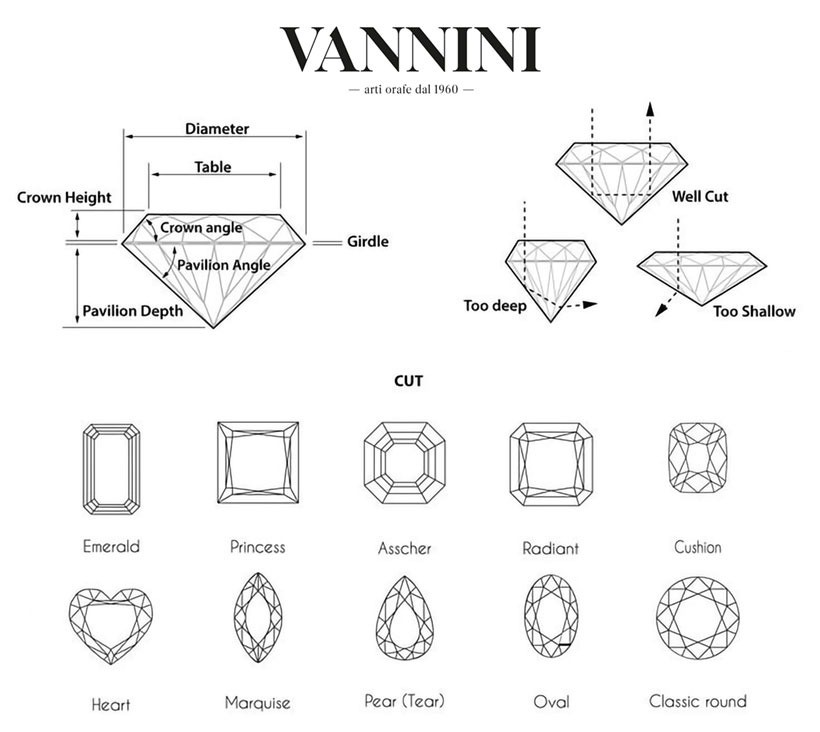
Distinction between Faceted and Non-Faceted Gems
Before we dive into the details of cuts, it is essential to understand the difference between faceted and unfaceted gemstones. Faceted gemstones are those that have flat surfaces etched at precise angles to maximize refraction and reflection of light, while unfaceted gemstones, such as the cabochon cut, are ground and polished without faces.
The Cuts of Precious Stones
Brilliant Cut: The Popular Choice among Gemstone Cuts
The brilliant cut is perhaps the best known and most widespread of all types of precious stone cuts. Featuring a round shape with numerous symmetrical facets arranged to optimize light, the brilliant cut is ideal for enhancing the sparkle of diamonds and other transparent gems. Variations include round, oval and heart cuts, each designed to enhance the stone to the fullest.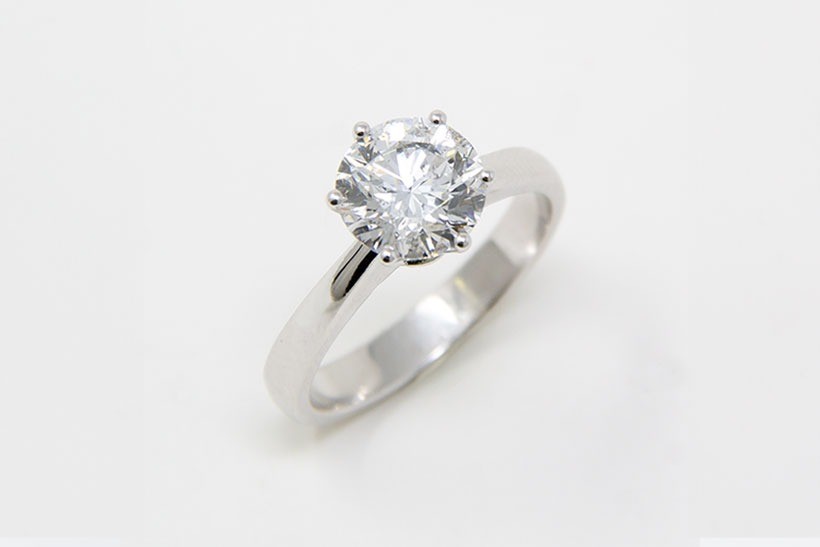
Brilliant cut diamond
Step Cut: Elegance and Precision
Step cuts, such as the emerald, baguette, and Asscher cut, are known for their wide faces and a stepped arrangement. These gemstone cuts are particularly prized for their ability to create a unique lighting effect, which emphasizes the clarity and color of the gemstone rather than sparkle.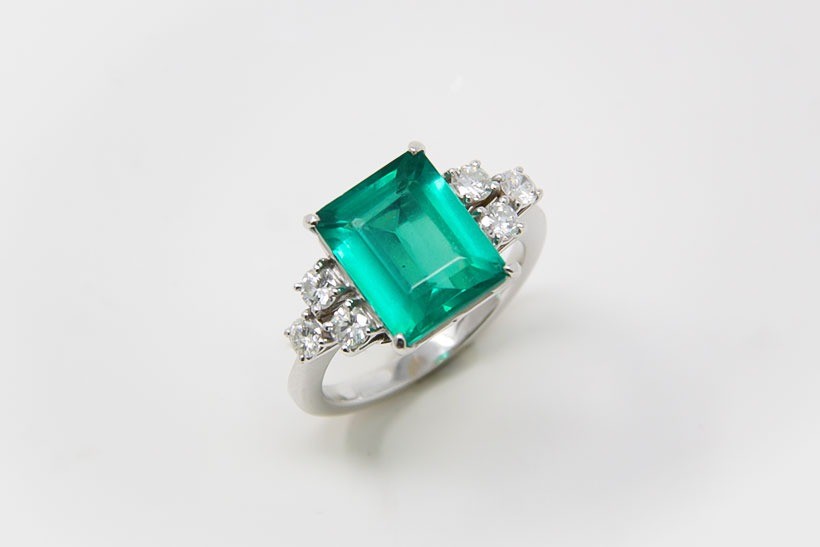
Emerald cut gem
Mixed Cutting: Innovation in Stone Cutting
Mixed cuts combine elements of shiny and stepped cuts, offering the best of both worlds. The princess cut and radiant cut are perfect examples of how these techniques can be fused to create gems with exceptional brilliance and distinctive character.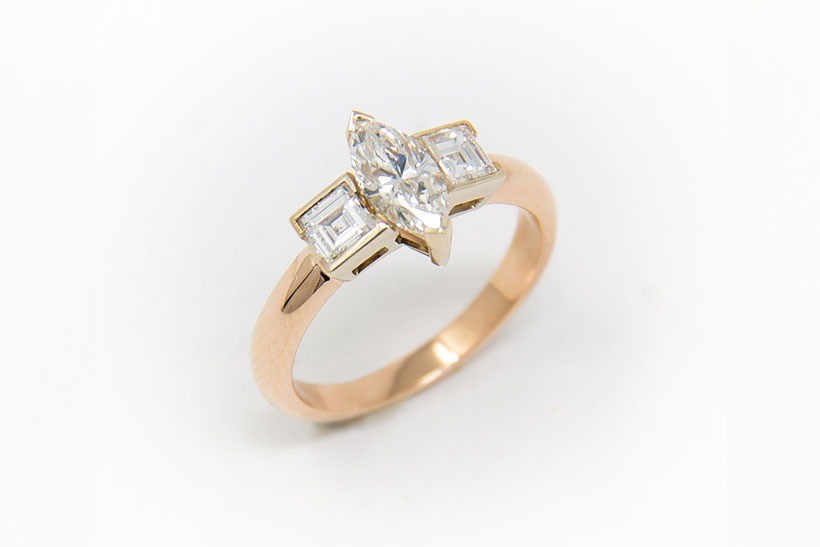
Shuttle cut central diamond; princess cut side diamonds
Cabochon Cuts and Other Special Cuts
The cabochon cut is ideal for softer or opaque stones and consists of a polished surface that may be rounded or slightly convex. Other specialty cuts include the cushion cut, pear cut, and marquise cut, each with a unique shape that can dramatically affect the final appearance of the stone.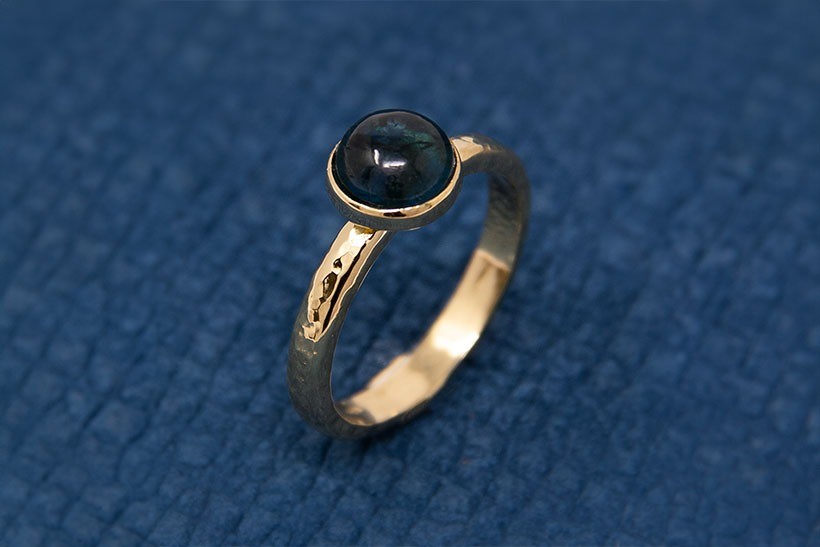
Cabochon cut
Choosing the Cut of a Precious Stone
The decision on which cut to choose for a gemstone is determined by a number of technical and aesthetic factors. First of all, the hardness of the stone is crucial: softer gems such as opal require cuts that reduce the risk of chipping, such as cabochon. In contrast, hard stones like diamonds are often cut into more complex shapes that enhance their natural brilliance.
Color is another determining factor: for example, the emerald cut is often chosen to enhance the depth and saturation of color in gems such as emeralds and aquamarines. This cut offers wide faces that allow greater interaction with light, intensifying the natural color of the gem.
The clarity of the stone also affects the choice of cut. Stones with fewer inclusions can be worked with cuts that create numerous light refraction planes, such as the brilliant cut, which masks small imperfections and improves the overall brilliance. On the contrary, stones with many inclusions can benefit from simpler cuts that do not accentuate these defects.
Finally, the design of the jewelry itself and personal preferences play a crucial role. Some cuts may be better suited to certain jewelry styles or specific customer needs, such as uniqueness or visual impact. Collaboration with an expert goldsmith can help choose the cut that not only enhances the intrinsic qualities of the gem but also harmonizes with the overall aesthetics of the final jewel.
Rely on an expert goldsmith
The art of cutting gemstones is as complex as it is fascinating. If you are considering purchasing or creating jewelery with precious stones, we recommend that you turn to experienced goldsmiths. Qualified professionals can guide you in choosing the ideal cut that best enhances your stone, ensuring that the finished jewel is as dazzling as it is long-lasting.