

Elegance, refinement and unrivaled craftsmanship: these are the characteristics that distinguish the jewels made with the technique of the Florentine fretwork. Through the alternation of full and empty, this ancient goldsmith art creates plays of light and shadows that make each piece unique.
Let’s discover together the secrets of this process, its origins and how the Florentine goldsmiths continue to pass it on from generation to generation.
What is the Florentine fretwork?
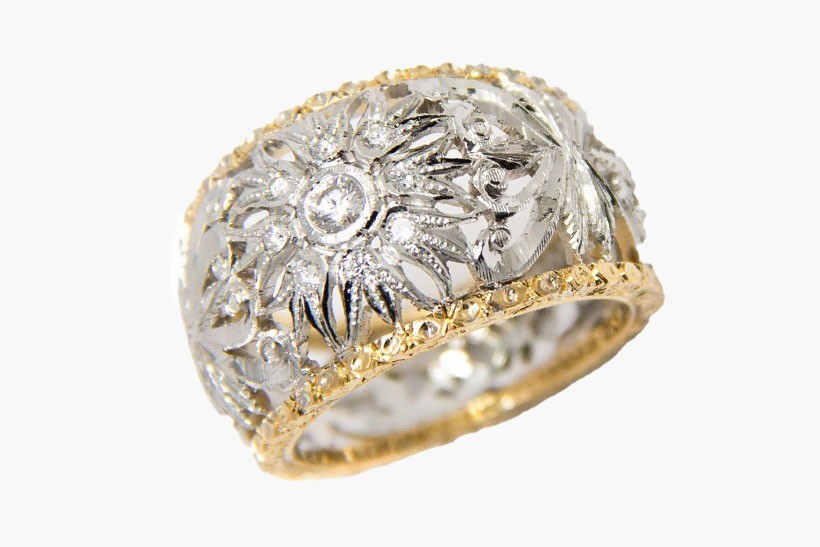
The Florentine fretwork is a sophisticated goldsmith technique that has its roots in the artisan tradition of Florence. It is a decorative method that consists in making ornamental motifs on precious metal sheets, such as gold and silver, through cuts and minute engravings.
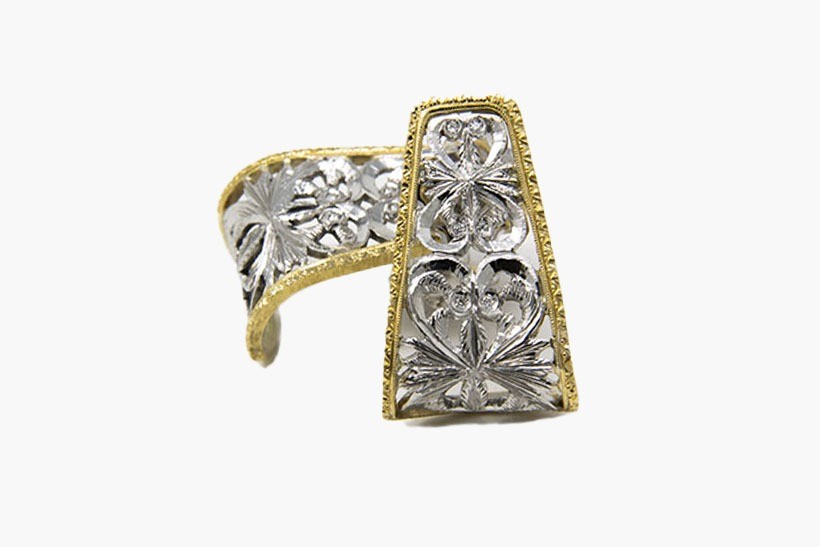
Considered one of the most distinctive expressions of Florentine goldsmithery, this technique is famous for its attention to detail and for the alternation of full and empty, which gives the jewels a unique lightness, enhancing their refinement through light and shadow.
Today, the Florentine fretwork is still practiced in the Florentine craft workshop, especially in the historic area of the Ponte Vecchio, where goldsmiths have passed on secrets and skills for generations.
Materials and production area of the Florentine fretwork
Florentine fretwork jewellery is exclusively made in Florence and surrounding areas, using high quality materials such as gold 750 (18kt) and 925 silver, often combined in duetone to enhance ornamental details.
Although the use of precious stones is discreet, creations can include diamonds, emeralds, rubies and sapphires, while for silver, hard and semi-precious stones such as amethyst and quartz are preferred.
The entire process takes place in the Florentine craft workshops, where tradition and craftsmanship come together to create unique jewels, witnesses of a long history of excellence in goldsmithing.
How the Florentine fretwork is made: techniques and tools
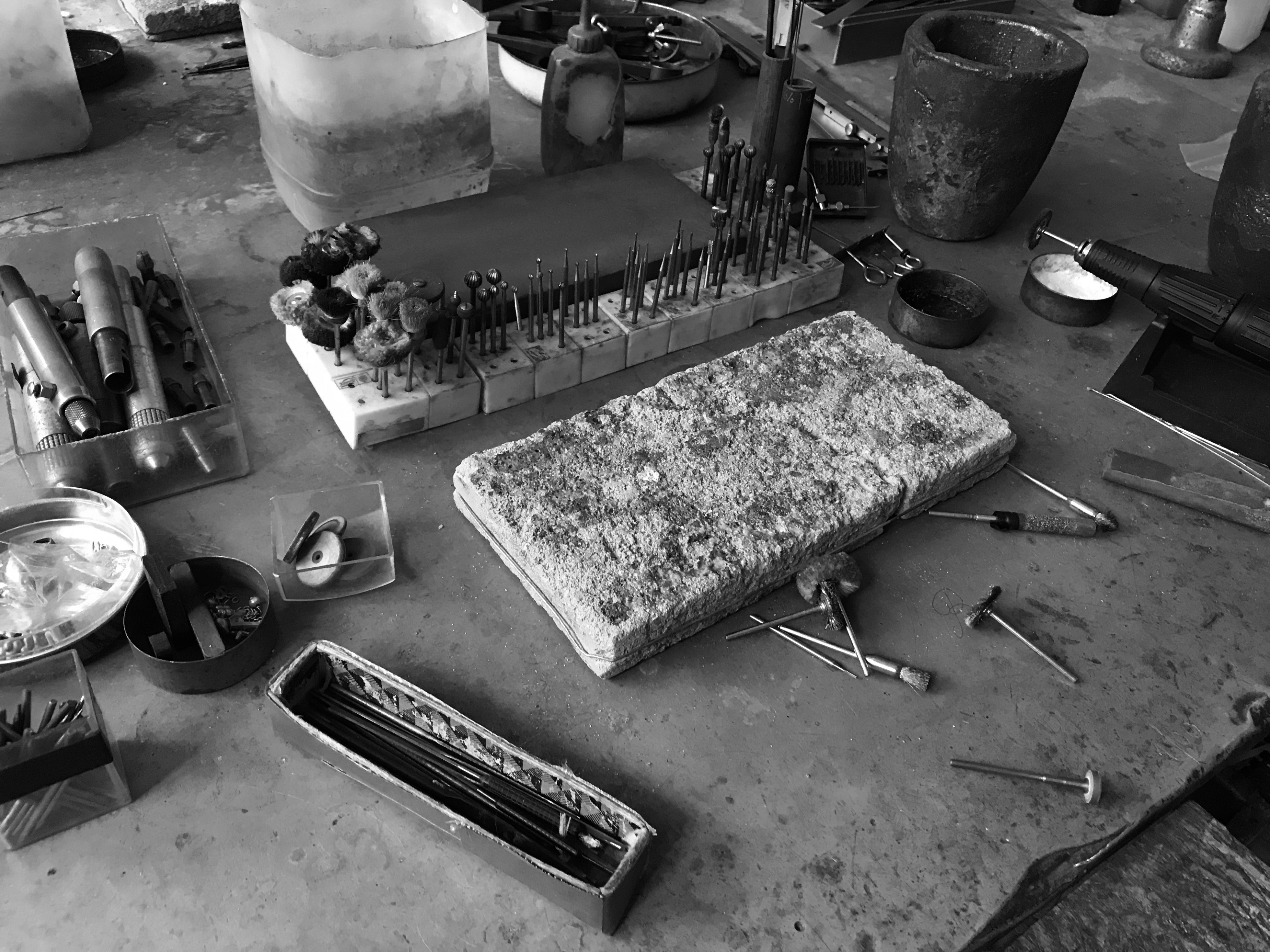
The creation of a Florentine fretwork is a process that requires great skill, precision and patience. Each piece is born from a careful design that involves the creation of a detailed product design, by hand or with specific programs. Once the project is defined, it proceeds through several stages of processing:
- Precious metal alloy casting: 18kt gold or 925 silver is cast to obtain a homogeneous alloy, ready to be transformed into workable plates or wires.
- Processing the alloy through different techniques
- Hand-crafted, which allows the metal to be shaped manually to obtain unique shapes.
- Die casting, used to ensure precision in the most complex shapes.
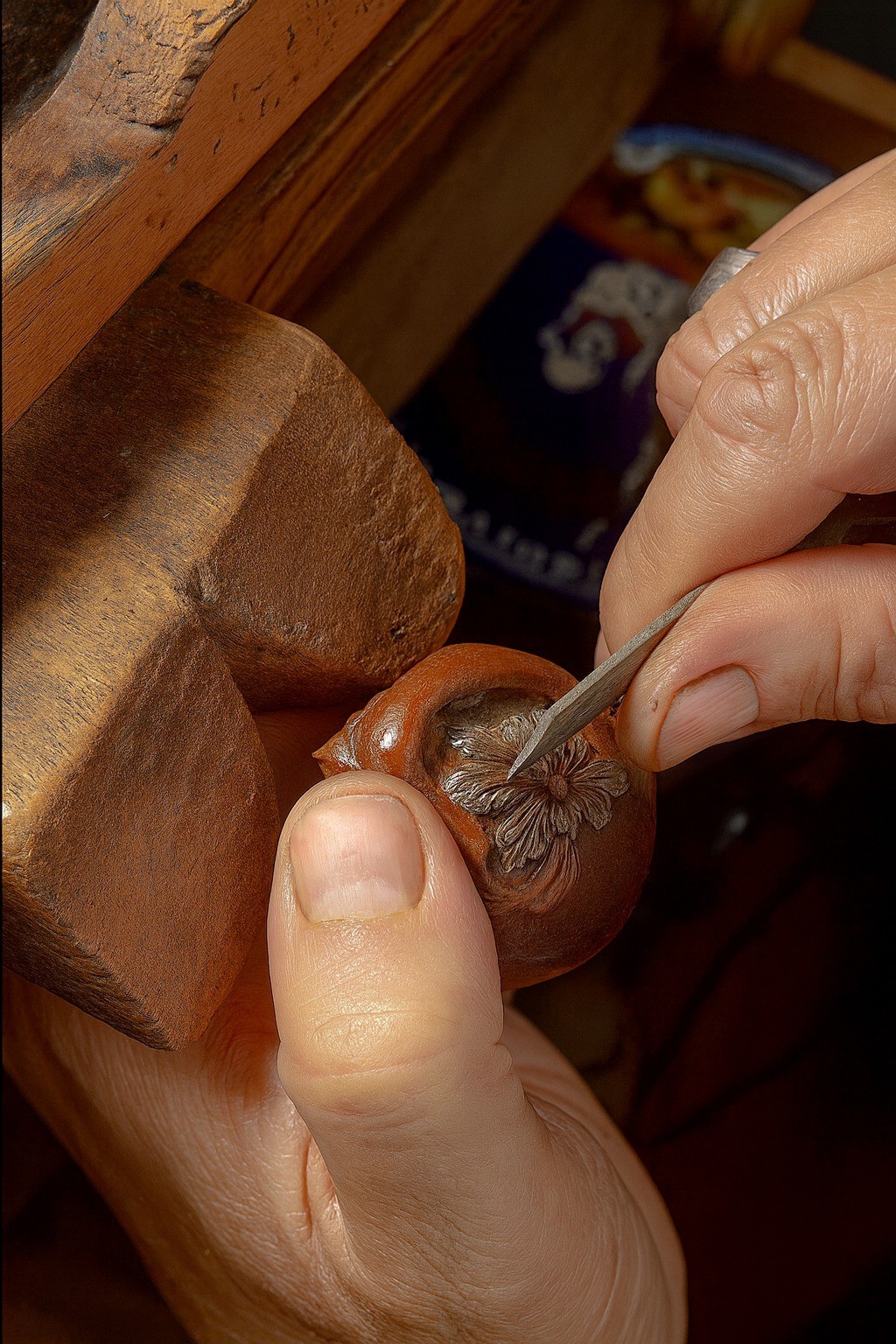
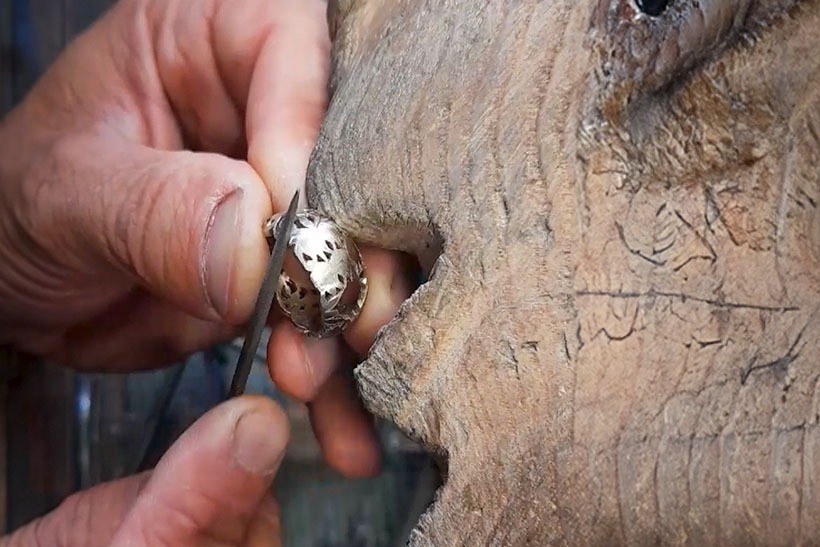
- Hand-crafted finishing: the semi-finished product is perfected through traditional techniques such as burin engraving, to add detailed decorative details or fretwork with a saw, which allows you to create elaborate patterns and games on light.
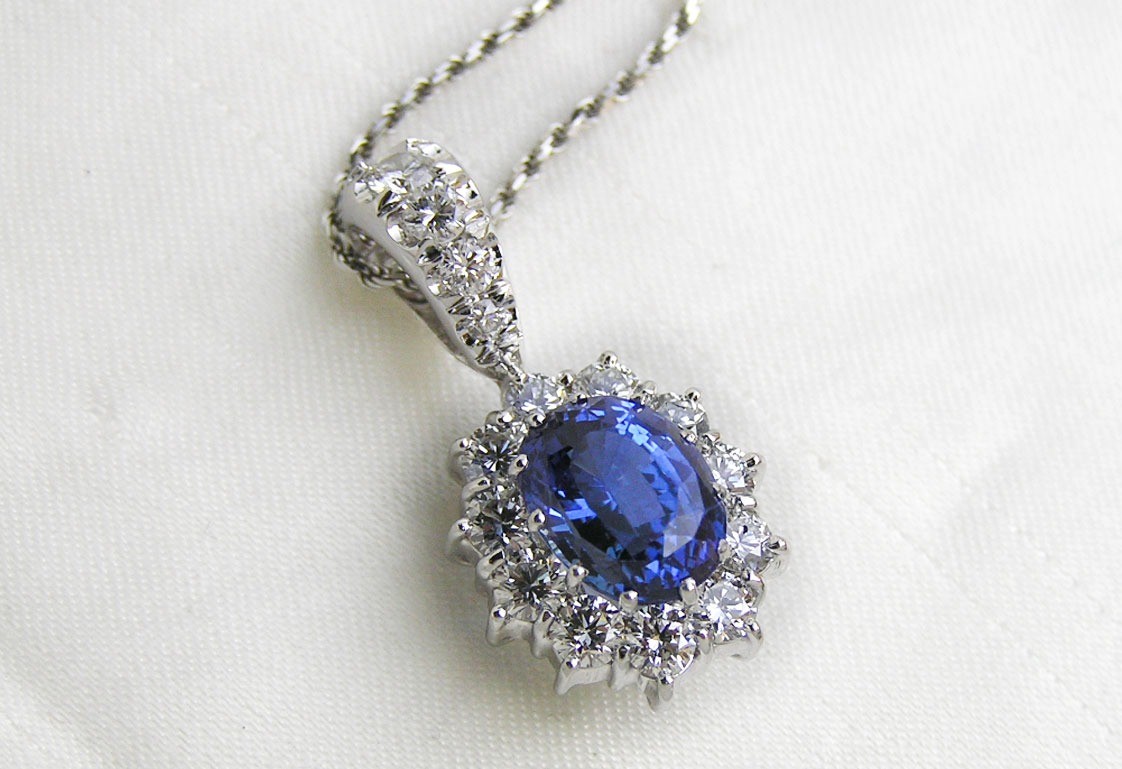
- Setting of the stones (if required): gems, such as diamonds, rubies or sapphires, are set manually to enhance the brilliance and elegance of the jewel.
- Final finishing: the last phase involves polishing, cleaning and application of protective treatments to ensure shine and durability.
Essential terminology: the language of Florentine goldsmith art
To better understand the complexity and elegance of the Florentine fretwork, it is useful to know some of the finishing techniques most used:
- Motivo a giralino: A sinuous ornament engraved with the bulino unghiarella, which recalls vegetable trusses and floral motifs.
- Granitura: Processing that creates a dotted texture, adding three-dimensionality and light games.
- Telatura: A decorative technique that gives greater visual depth, evoking the embroidery of traditional Florentine weaving.
In addition, depending on the design, a distinction is made between:
- Traforo a tralcio: Patterns inspired by branches and leaves, for a natural and elegant effect.
- Traforo a tulle: Small holes close together that create a light and transparent effect.
- Traforo a nido d'ape: Hexagonal cells for a geometric and orderly design.
- Traforo geometrico: Geometric shapes like rhombus or diamond for a modern look.
The historical origins of the Florentine fretwork
The Florentine fretwork has ancient origins dating back to the Middle Ages, but it is during the Renaissance that this goldsmith technique is established, inspired by the architectural and textile motifs typical of Florence. The ability of Florentine goldsmiths to create intricate and light decorations made the city a reference point for the art of goldsmithing throughout Europe.
A key moment for its spread came in 1593, when Ferdinando I de' Medici moved the workshops of the goldsmiths on Ponte Vecchio, consolidating the Florentine tradition and creating a real nerve center for the goldsmith.
Since then, the goldsmiths have passed on this refined technique from generation to generation, adapting it over time without ever altering its artisanal essence. Today, the Florentine fretwork continues to represent a perfect balance between tradition and innovation, keeping alive the charm of the Renaissance aesthetic canons that have made it famous all over the world.
The Florentine fretwork: tradition and craftsmanship
The Florentine fretwork is still today one of the most authentic expressions of Florentine goldsmithing, handed down in the artisan workshops of Florence. While maintaining the historical techniques such as the truss, tulle and lozenge tunnel, the laboratories have been able to integrate modern methodologies such as die casting, always ensuring a high quality craftsmanship finish.
Companies like Vannini Gioielli, custodians of this tradition, combine the Renaissance aesthetic with traditional techniques, creating unique jewelry that attract collectors from all over the world.
Discover the handicraft creations of Vannini Gioielli visiting the webpage or visiting the goldsmith’s workshop, where we make custom-made articles.