

Gold has long been a symbol of beauty, wealth, and cultural heritage, and it also represents a lasting form of investment. One of the most important aspects to understand is karatage, which refers to the percentage of pure gold in an alloy. Knowing how to recognize gold karats is essential for accurately assessing the quality and value of a piece. In this article, we aim to provide a helpful guide for both jewelry enthusiasts and first-time buyers, to support informed and confident choices when purchasing gold jewelry.
Why Choose Gold
Gold, unlike other metals, offers unique advantages. Its durability and ability to maintain value over time make it a preferred choice. Gold does not oxidize and resists corrosion, ensuring that jewelry maintains its shine for generations. This characteristic makes it not just a precious ornament but also a secure and enduring investment.
Gold Karats: What are the Karats of Gold?
The "karat" is a measure that indicates the purity of gold. Pure gold is classified as 24 karats, but to increase its hardness and resistance, it is often alloyed with other metals. This alloy affects not only the value of gold but also the type of jewelry and workmanship that can be made, depending on the physical properties of the metal.
Gold Karats: The Properties of Gold with Different Karats
24-Karat Gold Jewelry
Let's start with 24-karat gold, the purest form of gold that we can find. This type of gold is 100% pure and boasts a rich and ancient history, used since ancient times to create royal jewelry and even used as currency. Particularly appreciated in Greece, 24-karat gold is known for its extreme malleability and ductility, qualities that make it an ideal material for special and ceremonial jewelry. However, its pure nature also makes it more susceptible to scratches and deformations, which is why it is less common in everyday jewelry.
It's important to emphasize how the color of gold significantly varies based on the karat. While 24-karat gold boasts a rich and intense color, the hue becomes progressively paler as the percentage of pure gold decreases, as is the case with 9-karat gold.
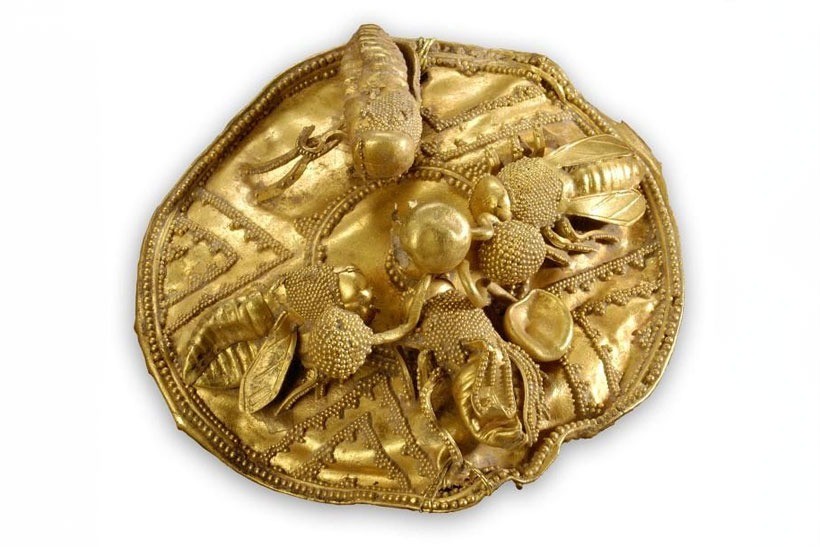
An example of a 24k gold creation made in ancient Greece. Jewels and precious objects like this, characterized by the presence of small spheres, are made thanks to the malleability of pure gold.
18-Karat Gold Jewelry
Moving on to 18-karat gold, we find gold that perfectly balances purity and durability. This type of gold, composed of 75% pure gold, gained popularity in Europe since the Baroque period. The addition of other metals to the alloy makes 18-karat gold more resistant compared to its purer counterpart while maintaining a high value and rich coloration. This is why 18-karat gold is widely used in modern jewelry, appreciated for its high quality and practicality.
18-karat gold finds a perfect balance between the visual richness of pure gold and the necessary strength for creating jewelry that can be used in daily life.
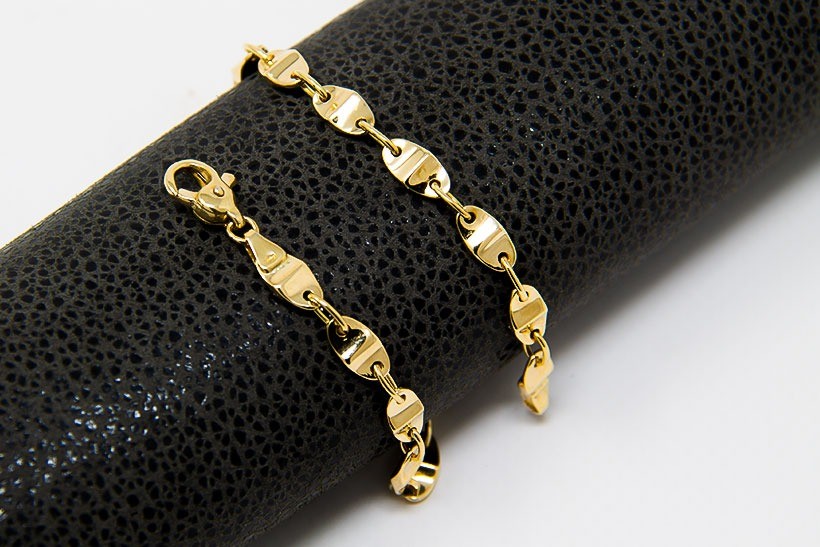
An 18k gold jewel made in our workshop: an elegant yellow gold bracelet perfect for everyday use
9-Karat Gold Jewelry
At the other end of the spectrum, we have 9-karat gold. With only 37.5% pure gold, it is a more economical choice, popular in the United States and the United Kingdom. Most of this type of gold consists of other metals, making it significantly harder and more resistant compared to higher karats. However, the lower amount of pure gold in this alloy results in less intense coloration and a potential presence of nickel or other metals that can cause allergies in some people.
9-karat gold is often the preferred choice for those seeking more affordable jewelry. However, its greater hardness compared to higher karats like 18 or 24 karats can present some complications in processing. The lower malleability of 9-karat gold implies that it may not be ideal for extremely detailed or intricate designs that require greater material flexibility. In some cases, working with 9-karat gold can lead to technical difficulties, such as the possibility of breakage or designs not maintaining their desired shape.
Why it is important to know how to recognize the gold carats?
In addition to the issue of value, a crucial aspect that distinguishes the various karats of gold is the difference in their physical properties, which directly affects the possibilities of working with the metal.
Without being able to distinguish the quality of the gold we are buying, we risk finding ourselves in the unpleasant situation of discovering afterward that we do not have jewelry of the value we believed, or of taking a piece of jewelry for repair due to a break only to discover then that the repair will not be possible, or that it will not restore the jewelry to its original shape.
But then, how can we manage to recognize the karats of gold?
How to recognize the gold carats?
Gold and Karats: Recognizing Them Through Hallmarking
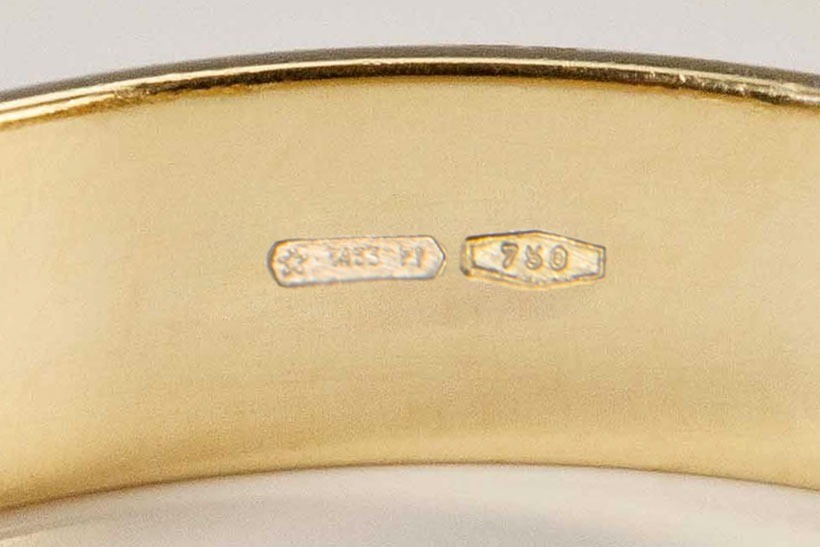
The karat of gold, a fundamental aspect in the evaluation of jewelry, is determined and marked through the use of a hallmark. This mark, impressed on the gold, is not just a mere indication of its purity but is also a distinctive sign of authenticity and quality.A hallmark on a gold piece of jewelry typically contains numbers that indicate the karats, like "750" for 18-karat gold (indicating a 75% pure gold content) or "375" for 9-karat gold (indicating a 37.5% pure gold content). These numbers provide an immediate and precise understanding of the amount of pure gold present in the alloy.
In addition to numbers, hallmarks can also include specific symbols or trademarks that identify the jewelry's manufacturer, offering an additional level of reassurance about the piece's origin and quality. In some countries, the law requires that all gold jewelry be hallmarked, thus ensuring transparency and trust for consumers.
Guarantees and Certifications
Guarantee marks and certifications play an essential role in the jewelry industry. A guarantee mark is further assurance that the gold meets the purity standards set by certification authorities. These marks are particularly important as they provide independent proof that the gold has been thoroughly tested and evaluated.The presence of certifications issued by reliable bodies is crucial, especially in the luxury jewelry market. These certificates provide detailed details not only about the gold's karat but also about other important aspects such as weight, provenance, and any special processes the jewelry has undergone.
In summary, the ability to identify and understand hallmarks, guarantee marks, and certifications is vital for any consumer of gold jewelry. These elements not only ensure the quality and authenticity of the precious metal but also provide valuable guidance for evaluating the value and craftsmanship of each piece, ensuring that the purchase is a secure and satisfying investment.
24-Karat Gold, 18-Karat Gold, and 9-Karat Gold: Long-Term Investment
Gold jewelry, regardless of its karat, has long been considered a valuable investment, as well as a symbol of beauty and refinement. Each karat of gold – whether it's 9, 18, or 24 karats – has unique characteristics that influence its value both as a physical asset and as a long-term investment.
An investment in gold jewelry is not limited to the mere physical possession of a precious asset. It also means owning an object that can be passed down through generations, maintaining or even increasing its value over time. Furthermore, gold jewelry, unlike other investments, has added value: their beauty and the art of their creation, which can appreciate independently of the pure metal's value.
When choosing to invest in gold, it is important to consider not only the karat but also the quality of workmanship, design, and any historical or artistic value of the jewelry. These factors can significantly influence the value of the investment over time, making gold jewelry not just a safe haven for capital but also a work of art to be appreciated and worn.
Styles and Designs of Gold Jewelry
Gold jewelry ranges from classic designs to modern and customized ones. This diversity allows choosing pieces that reflect individual personality and suit different occasions.
In our goldsmith's shop we create refined gold jewelery every day, also commissioned by our customers. Here are some examples of our creations.
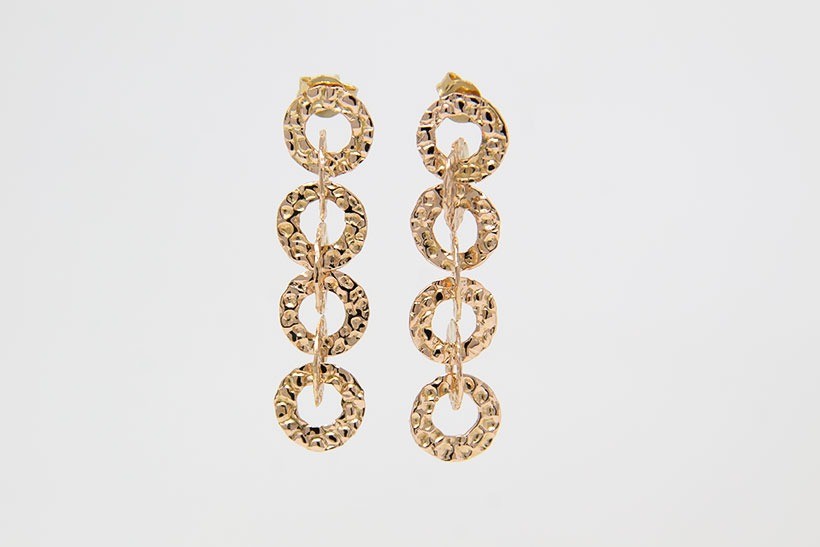
Hammered gold earrings
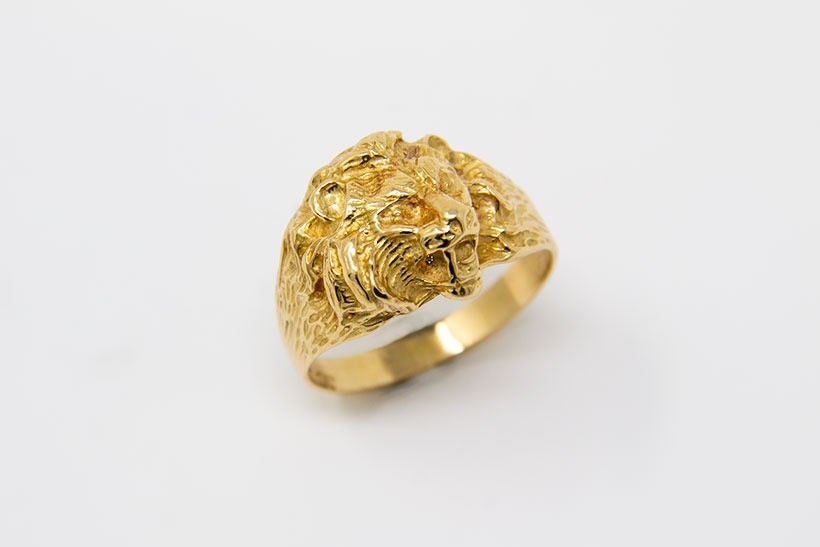
Yellow gold ring with elaborate engraving
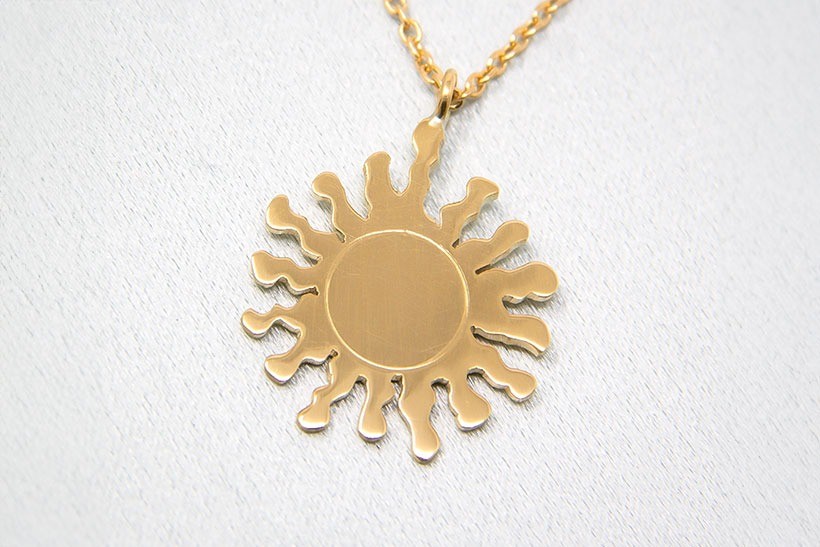
Custom necklace made for one of our customers
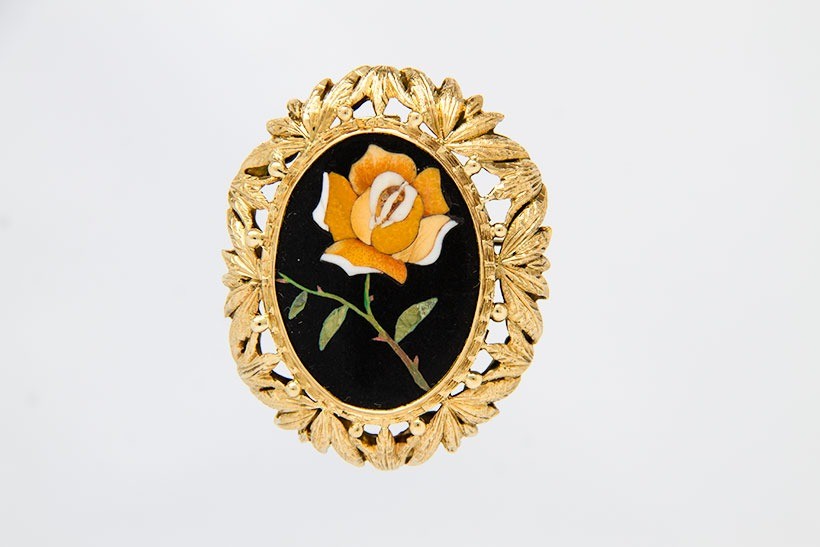
Yellow gold brooch with delicate floral mosaic
How to recognize the gold carats and buy with confidence
In conclusion, choosing gold jewelry, whether it's 9, 18, or 24 karats, is a decision that goes beyond the simple purchase of a fashion accessory. It's a choice that encompasses history, culture, art, and investment. Each karat of gold has its unique qualities, catering to different needs, both in terms of style and functionality. 24-karat gold shines for its purity and its connection to history, 18-karat gold offers a perfect balance between elegance and resistance, while 9-karat gold presents itself as a more accessible and practical option for everyday use but with limitations in the workability of gold.
Every piece of gold jewelry carries a story, intrinsic value, and the potential for appreciation over time. Whether you are collectors, investors, or simply lovers of beauty, understanding the karat of gold and its significance is essential for making an informed choice. We encourage you to consider not only the material value but also the emotional and artistic meaning of the gold jewelry you choose, as they represent an invaluable heritage.
We invite you to visit our goldsmith's shop for dedicated advice from our experts, so that your next purchase of gold jewelry is an informed, fulfilling, and enduring investment in time.