

Do you believe that the diamond is the rarest and most precious gem in the world?
Well, today you will find out the truth: there is an even more sought-after stone.
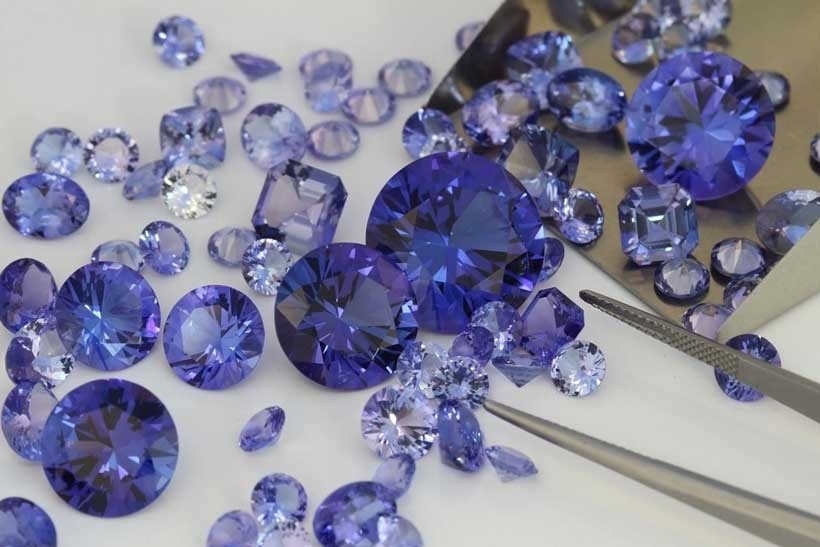
We are talking about tanzanite, a beautiful gem that stands out for its very intense iridescent blue color with extraordinary reflections.
The gemstone market varies continuously, and sometimes it happens that a little known stone becomes highly sought after and appreciated at some point, and this is precisely what happened to tanzanite.
This stone, as we will soon discover in detail, has acquired more and more prestige over the years, and its value increases as its deposits decrease.
Where does Tanzanite come from: why is it so rare?
Tanzanite sees its discovery in the sixties, and owes its name to the Tiffany jewelry. The reason why it was called this way is linked precisely to the place from which these stones are extracted: an area of Kilimanjaro, in Tanzania, the only place in the world where it is possible to find this stone.
However, the tanzanite deposits are running out, and it is estimated that in a few decades there will be no more gems to extract. This is why tanzanite is considered today more rare than diamonds.
Tanzanite and the link with local cultures
Tanzanite is closely linked to the culture and traditions of the Masai people, for whom blue is a sacred colour. Even today, women who give birth are offered tanzanite stones as a good omen, and a legend has it that it was the Masai nomadic shepherds who casually discovered, after lighting a brushwood fire, the property of the gem to change its color thanks to the high temperature.
The characteristics of Tanzanite: refining beauty
Tanzanite is a magnificent trichoic gem, capable of generating three different colors in its reflections.
It is a particular variety of crystalline zoisite, which when combined with percentages of vanadium and chromium forms a very beautiful and extremely rare stone, a process that is impossible to take place in a place other than Tanzania. In fact, the geological environment of this land is the only one that offers the ideal conditions for the formation process of this mineral.
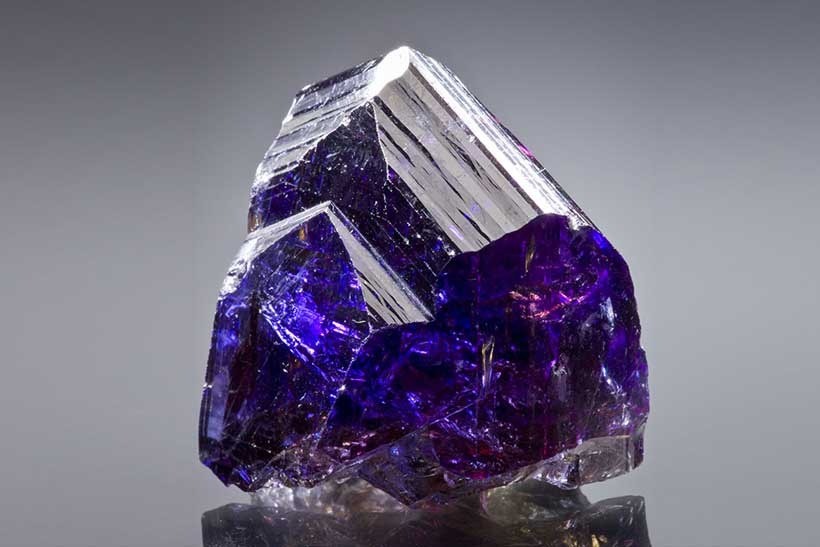
But tanzanite, freshly extracted, what is it like? In its raw state, tanzanite exhibits a reddish hue. In order for its blue color with violet reflections to emerge, it must be subjected to a particular treatment, with high temperatures.
In this way, the gem changes color assuming a vivid blue color and the splendid characteristic of presenting blue, purple, red and bronze iridescences, which change based on how the stone is observed.
The rarest color ever, and which therefore increases the preciousness of the gem, is intense and pure sapphire blue, since the absence of inclusions greatly accentuates the play of light.
Use of Tanzanite Gems in Jewelry
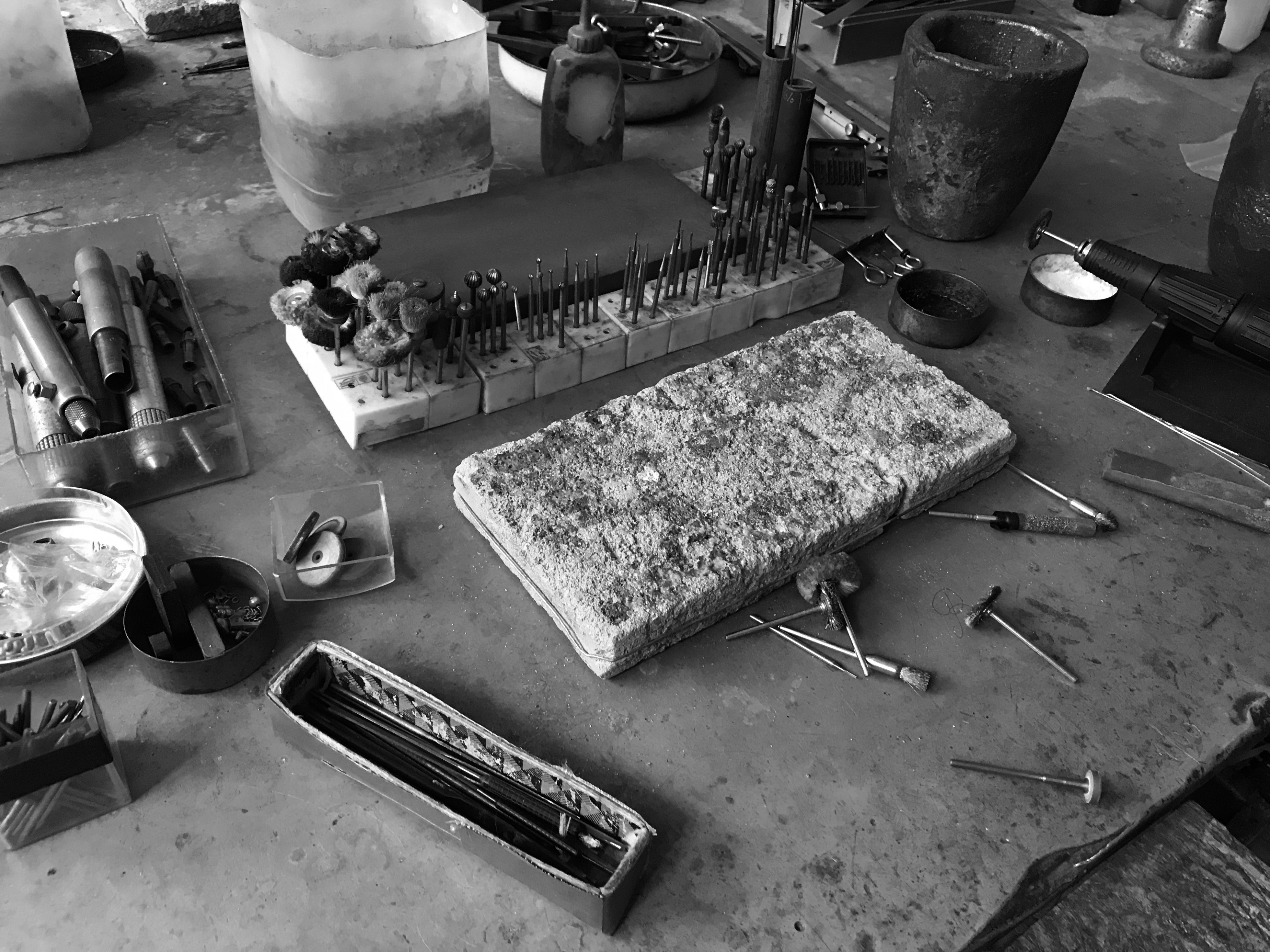
Thanks to its beauty and its preciousness, tanzanite is used in jewelry to make jewels of great value. It takes great skill and attention to treat the stone, because if it is heated excessively with a goldsmith's torch it can crack and break, and it can also be ruined by hydrochloric and hydrofluoric acids.
It is a relatively fragile stone that tends to get scratched or cracked with shocks, which is why in jewelery it is usually recommended to use it for jewels that are less subject to stress, such as brooches, earrings or necklaces, although of course it very often happens that you also run into beautiful tanzanite gemstone rings.
However, you must always be careful when wearing a jewel with this precious stone, in order not to risk scratching it and also the cleaning of this type of jewel requires a lot of attention and must be done delicately.
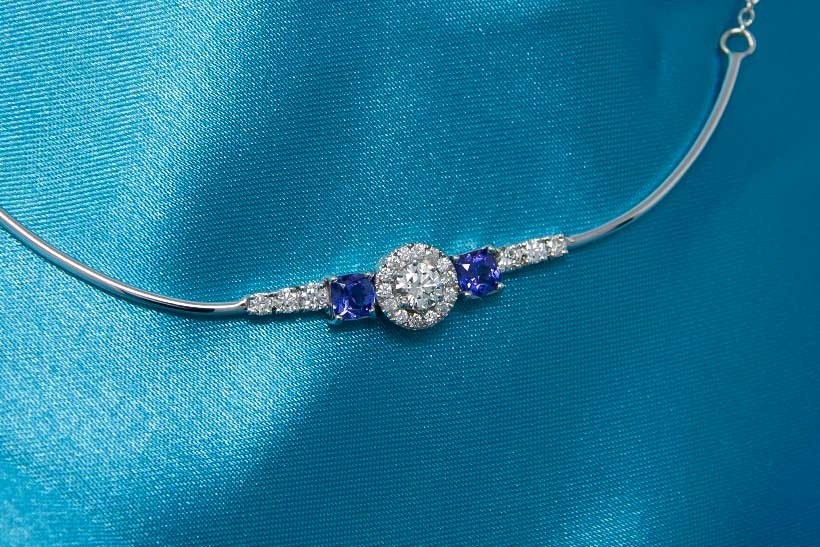
In our goldsmith's shop we almost exclusively create custom-made jewels, created to make the wishes of the customers who rely on us come true.
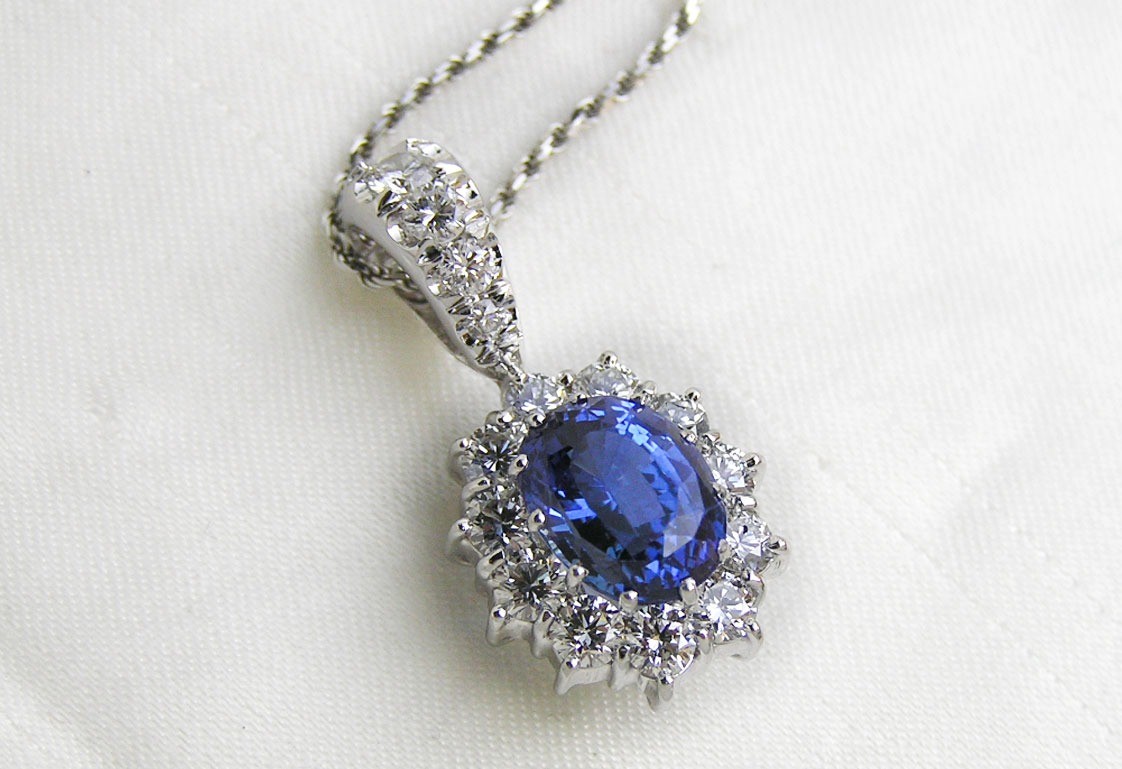
We have created many jewels with tanzanite, which with their beauty and refinement have made those who received them happy.
This necklace with tanzanite, silver and diamonds is an example of our creations.
Rely on trusted goldsmiths for the creation of precious and personalized jewels. If you want to find out more about our production, visit the website, or come and visit us in our goldsmith's shop in the heart of Florence.