

The Florentine goldsmith's art is a heritage of inestimable value that goes beyond the mere beauty of the jewels. It embodies a millenary tradition of craftsmanship, which gives each creation an aura of authenticity and prestige.
If you want to learn more about the history and evolution of the Florentine goldsmith's art, in this article we will make a fascinating journey together starting from the roots of this art, to understand its real value.
The Florentine goldsmith's art and its millenary origins
The city of Florence has always been a center of excellence for art and craftsmanship, and goldsmithing is a perfect example of this.
The origins of the Florentine goldsmith's art go back a long way, we have to go back over the centuries to the ancient Etruscan civilization, which occupied these territories between the 8th and 3rd centuries BC.
The Etruscans were skilled craftsmen and knew how to work precious metals, such as gold and silver. They created jewels with very particular designs, thanks to some very innovative techniques for the time. One of these was granulation, which consists of applying small gold balls to the surface of the jewel to create a decorative pattern.
When, a few centuries later, the Romans conquered the region, they appropriated the goldsmith skills of the Etruscans, developing them even further.
Already in Roman times, in fact, the Florentine goldsmith's art was renowned throughout the empire, and a large number of jewels and precious artifacts were made in Florence.
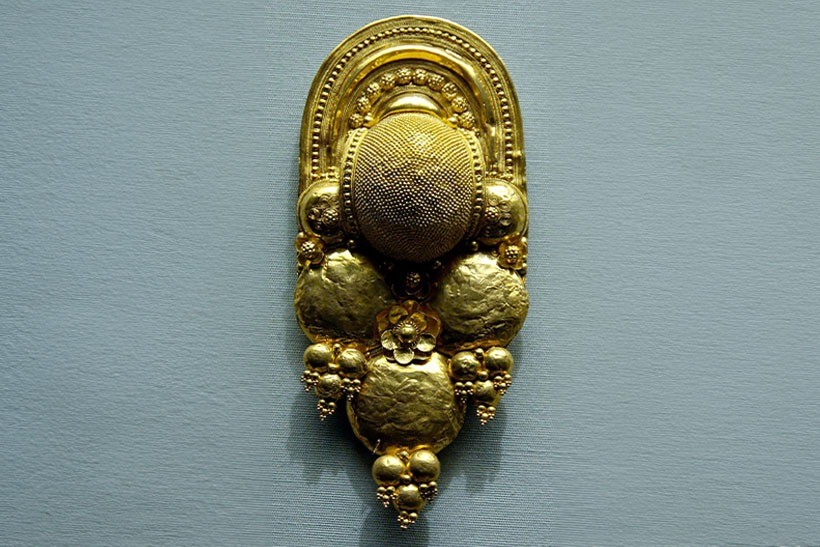
Example of granulation in an Etruscan jewel
The Middle Ages and the Renaissance of Florentine goldsmithing
In medieval times, Florence was a city that enjoyed an important political independence, also due to its growing economic power. In those years the city - which was located in a strategic position along the transit routes between the north and south of the peninsula - was a thriving point of reference for Mediterranean trade.
Florentine trade was so virtuous that even the goldsmith's art, already historically present, grew and developed further. Goldsmiths created jewels for nobles and important ecclesiastical officials, displaying an exceptional talent for setting precious gems and working with gold and silver.
But it is during the Renaissance that the Florentine goldsmith's art experienced its maximum splendour.
Precisely at that time, the city of Florence was long considered one of the main centers of Western art and culture. It has attracted artists, artisans and patrons, becoming a hotbed of talent and innovation. And the goldsmith's art was no exception...
Among the many patrons who financed goldsmithing in Florence, the noble Medici family stands out, offering protection and patronage to numerous artists and goldsmiths within the city.
These patrons not only appreciated jewels as a sign of social status, but also used them as instruments of political and diplomatic power.
There were many talented craftsmen who lived in Renaissance Florence, it is good to remember Benvenuto Cellini, Bartolomeo Ammannati and Lorenzo Ghiberti, who helped create extraordinary jewels that embodied the elegance, refinement and innovation typical of that era.
Their works, such as the famous Porta del Paradiso by Ghiberti, a masterpiece of goldsmith sculpture, made the Florentine goldsmith's art famous throughout Europe.
These masters have left an indelible mark on the Florentine goldsmith's art, creating a fertile environment for handing down and innovating the secrets of these ancient techniques up to the present day.
Over the years Ponte Vecchio becomes the main symbol of Florentine goldsmith art. Here the main Florentine goldsmith shops gather and techniques and processes are developed, especially since 1593, the year in which Ferdinando I de' Medici wanted to make Ponte Vecchio the reference point for goldsmithing in Florence.
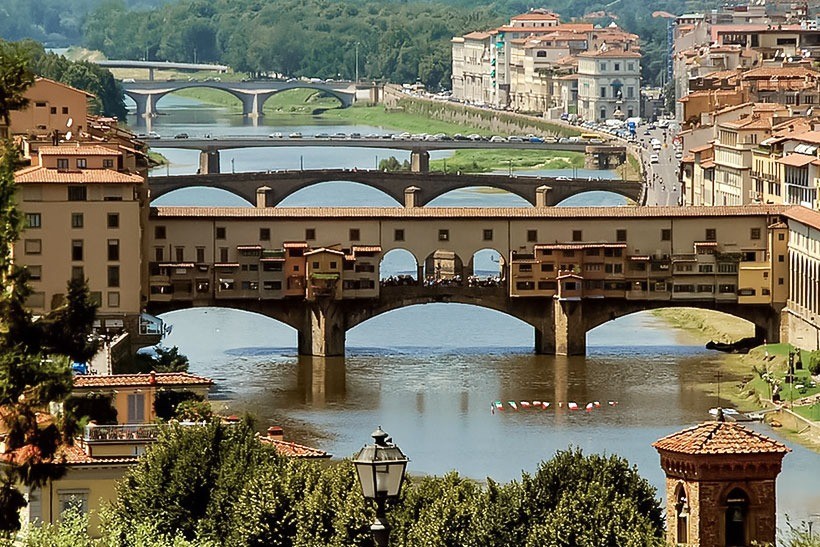
Ponte Vecchio
Florence goldsmith techniques
Florentine Renaissance goldsmiths were famed for their technical skill and attention to detail.
There are many techniques that distinguish the goldsmith's art in Florence, such as the Florentine fretwork, which we talked about in this article.
Two other techniques also stand out, chiselling and engraving.
The chiselling
Chiselling is an ancient technique, still used today to create details and relief decorations on metal objects.
It is a manual manufacturing process that requires considerable skill and precision on the part of the craftsman - called the engraver.
This working method owes its name to the key tool used by the craftsman: the chisel. It is a cutting tool with a steel or carbide tip mounted on a shaft.
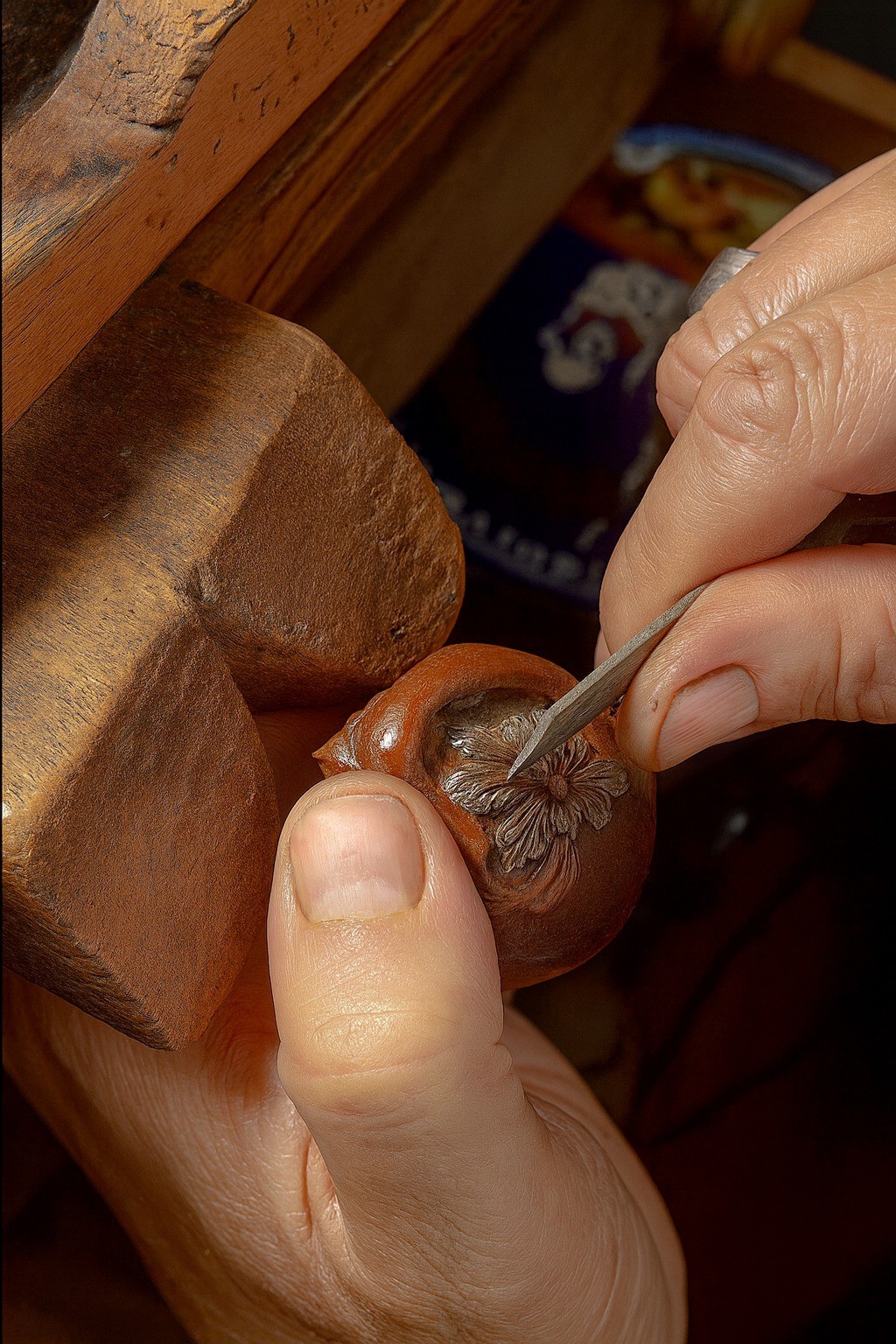
During chiselling, the craftsman uses the chisel to sculpt and shape the surface of the metal to create decorative patterns and fine details. Creating these decorations requires considerable skill: a good engraver must be able to control the depth and precision of each stroke to achieve the desired result. It's a laborious process that takes years of practice to get right.
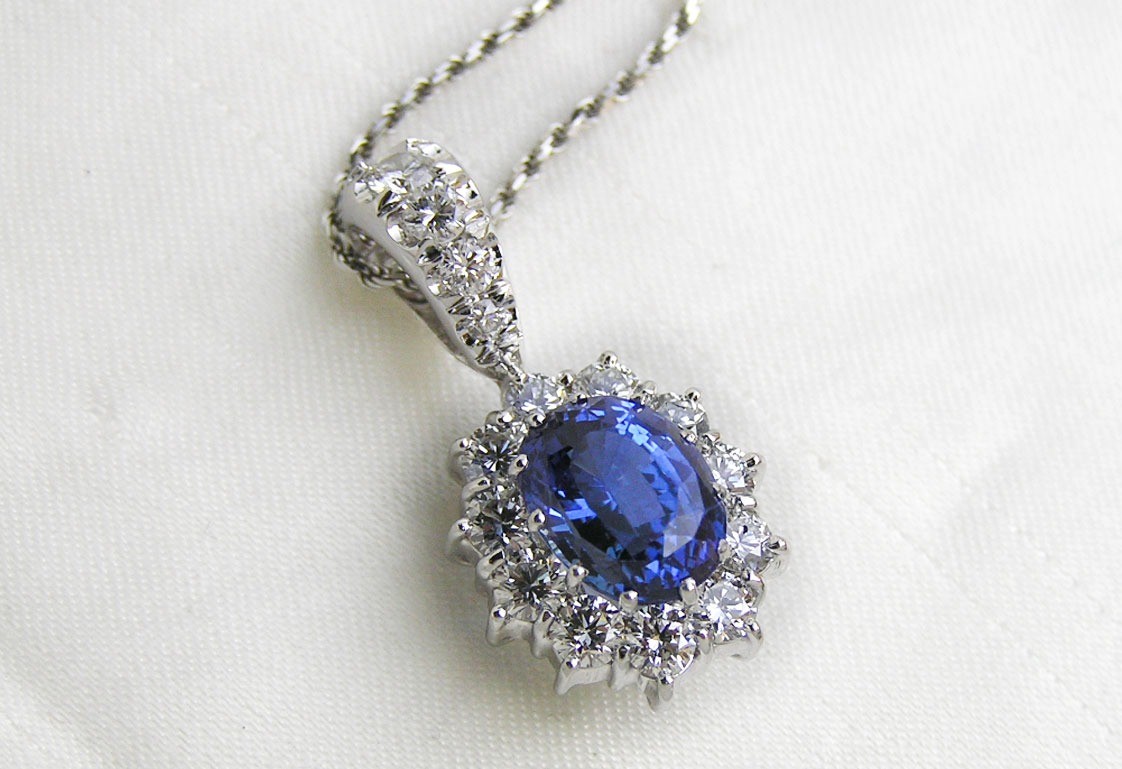
Do you want to know a trivia? The pendant that we have reproduced in our goldsmith's workshop based on what Botticelli's Three Graces are wearing is a chiseled jewel (you can find it in our section on artistic reproductions).
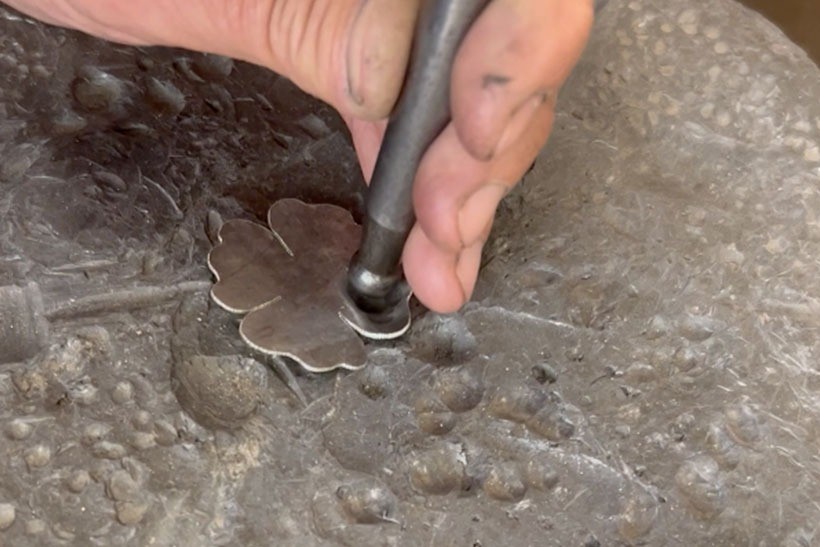
The chiselling of a jewel in our workshop
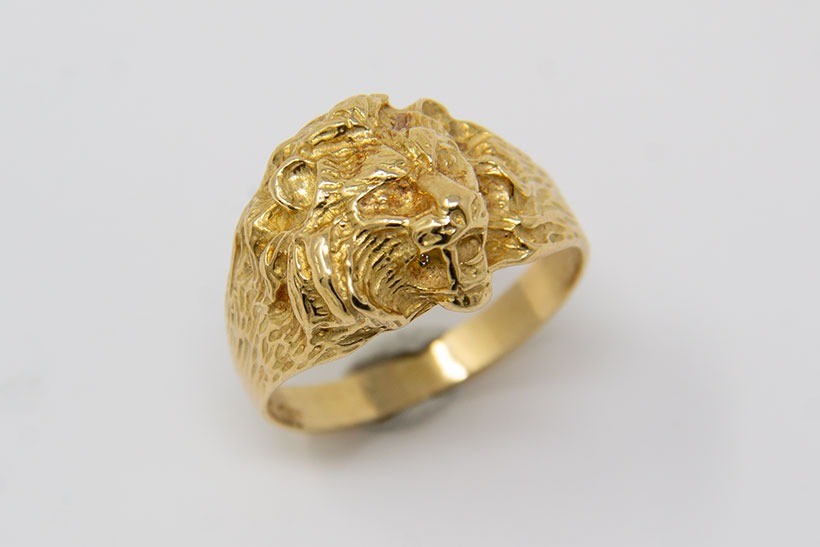
Ring with a chiseled lion's head
The engraving
The engraving technique is a manufacturing technique which consists of carving a surface to create a decorative pattern. It can be obtained on various materials, such as stones, wood, corals, resins and metals.
Precisely on metals, this technique has been exploited for centuries by the Florentine goldsmith school, to create characteristic jewels of great beauty and refinement.
The tool used for engraving is the burin, characterized by a cutting and sharp tip, which is fixed to a wooden handle, called a còdulo, which allows the craftsman to have better control and stability during the engraving.
In ancient times the engraving was done by hand with stone burins. Over the centuries the technique has been perfected and goldsmiths have adopted hardened steel burins to improve the precision and effectiveness of the whole process.
The engraving technique requires an expert hand, in fact goldsmiths must be able to trace precise lines on the metal, in order to be able to create highly refined decorations and details.
Today, despite the advent of modern technologies, many goldsmiths - including the goldsmiths of the Vannini workshop - continue to practice the ancient burin engraving technique. This is because the objects created with this technique carry the hallmark of the skill of the craftsman who made them, making them unique.
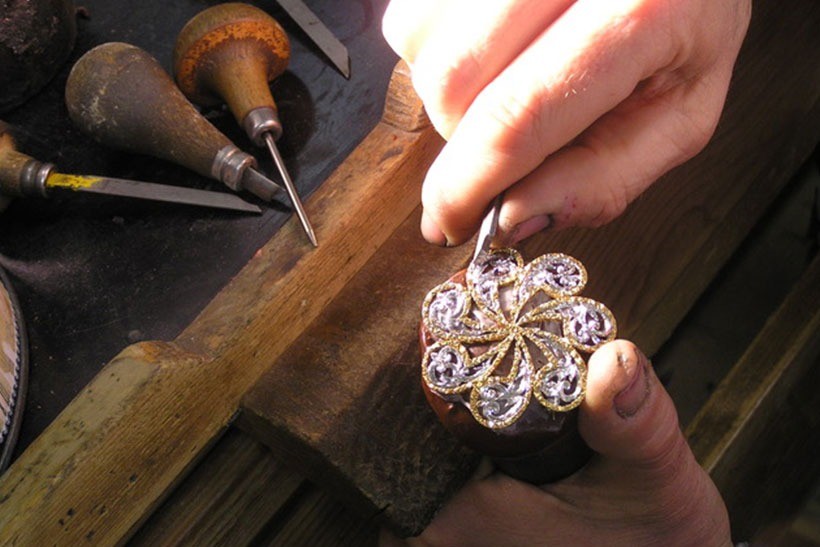
Engraving work
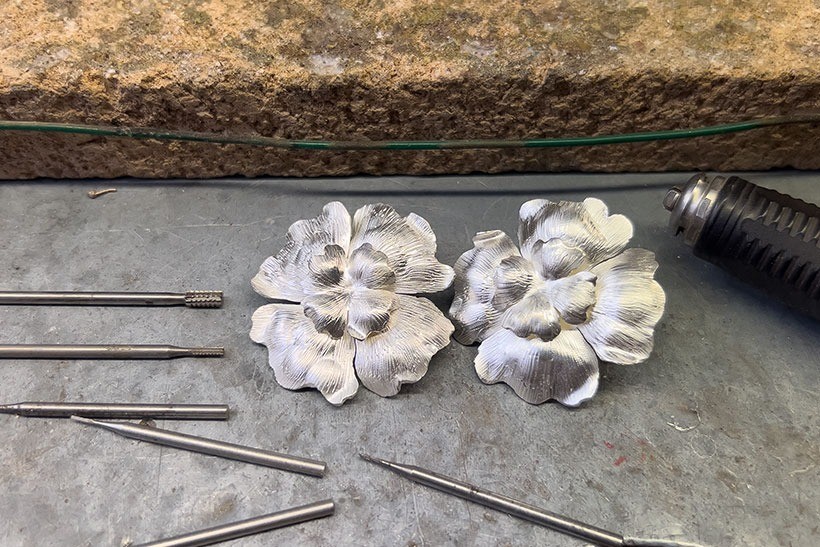
Custom engraved and chiselled earrings
Florentine jewels between history and innovation
Another feature that distinguishes Florentine goldsmith works is the use of motifs inspired by nature: often in Florentine jewels you can find leaves, flowers and animals finely intertwined in gold and decorated with precious stones of great value. Florence, in fact, was an important gem trading centre, thanks to its strategic position along the trade routes between the Orient and Europe. This allowed Florentine goldsmiths to have access to a vast selection of gems of great value and beauty, which further enriched their creations.
Over the centuries, the Florentine goldsmith's art has continued to evolve, adapting to changes in tastes and fashions. During the Baroque period, for example, Florentine jewelry was characterized by elaborate shapes and an abundant use of large gemstones.
In the 19th century, with the advent of neoclassicism, Florentine jewels were inspired by motifs from ancient Greece and Rome, with particular attention paid to elegant lines and symmetry.
In the modern era, the Florentine goldsmith's art has maintained its reputation for excellence and has continued to evolve, combining ancient techniques with new ideas and materials.
Today, the Florentine goldsmith's art is appreciated all over the world for its elegance, attention to detail and timeless beauty.
The handcrafted jewels of Florence are sought after by collectors, art lovers and lovers of luxury, making Florentine goldsmithing a symbol of prestige and refinement.
The value of the Florentine goldsmith's art
The Florentine goldsmith's art is a treasure of inestimable value, which goes beyond the simple aesthetic aspect of the jewels.
It embodies a millenary tradition of craftsmanship, passion and dedication, which gives each creation an aura of authenticity and prestige.
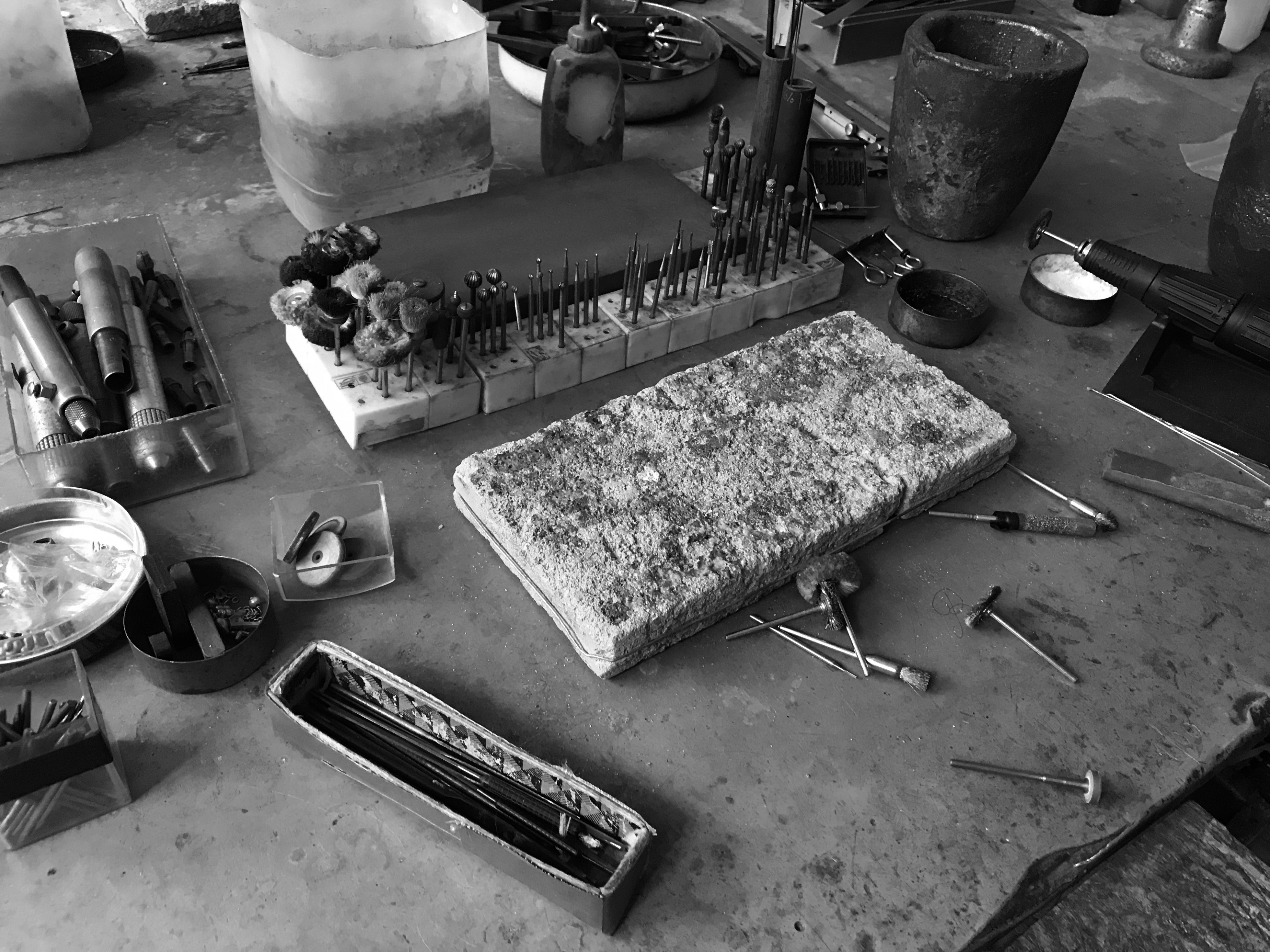
Florentine master goldsmiths are renowned for their extraordinary skill and meticulous attention to detail. Each jewel is made by handing down ancient techniques that make each piece unique and unrepeatable.
The craftsmanship of gold and silver, which requires patience and skill, results in jewels with impeccable finishes that last over time.
Vannini Gioielli fully embodies the value of the Florentine goldsmith's art, in fact in our work we draw inspiration from the great Florentine school and with the same vigor and passion of the masters of the past we create unique precious objects, carefully designed and made with the experience of more than 60 years of work.
Whether it's a ring, a bracelet or a necklace, every Vannini jewel encapsulates the elegance and spirit of Florence - with a touch of innovation.
Come and visit us: you can choose from our collections of selected models, or entrust us with the creation of a personalized jewel created specifically to give shape to your idea.
If you too want to wear jewelery inspired by the Florentine goldsmith tradition, you can view our handcrafted models on our website, or you can come and visit us in our jewelery shop in Florence, so you can see our creations in person.