The french blue


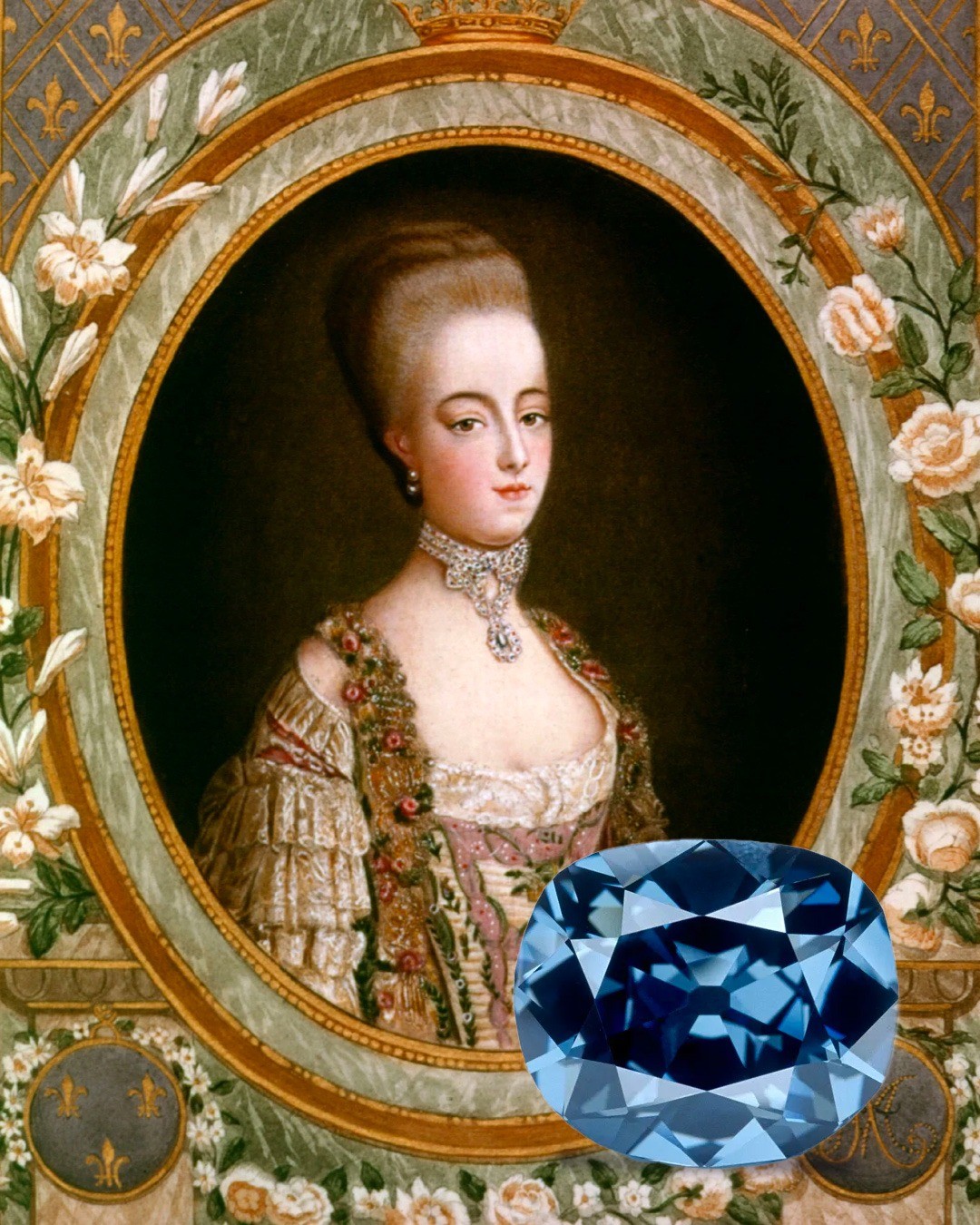
The Blue Hope Diamond, also known as Blue of France or Tavernier Blue, of 45.52carat, Vs1 purity, is of Indian origin, is cut into pillow and its color is called "blue envy".
It has a left fame. The first owner, the French merchant Jean Baptiste Tavernier seems that stole it from an Indian statue, when it was still rough and weighed 112 carats, so he did
bankruptcy and died, but now eighty years old. The Blue Hope then passed to the king of France Louis XIV, who He had it cut, reduced to 67.5 carats, and so it came to Louis XVI and Marie Antoinette,
who ended up at the gallows. Legend has it that a subsequent owner, a jeweler, died of a heart attack when the diamond was stolen from him and that his son, guilty of the theft, committed suicide in the sense
of guilt. The stone arrived in London, where it was reduced to 45.52 carats and sold to the English banker Hope, who soon after separated from his wife and then decided to get rid of the diamond, thinking that it would bring evil. After several steps, today is the stone guarded and at the Smithsonian Institute in Washington.


Post correlati

Sapphire: history, colors, and properties of the gemstone Rettangolo
Sapphire: history, colors, and properties of the gemstone

From royal crowns to your engagement ring: sapphire is so much more than a gemstone. Discover its ancient history, the colors that make it unique, and the properties that have crowned it as a timeless symbol of elegance, love, and protection.

How Do Goldsmiths Work? A Focus on Florentine Artisan Mastery Rettangolo
How Do Goldsmiths Work? A Focus on Florentine Artisan Mastery

In a world dominated by mass production, the goldsmiths of Florence continue to stand out for their authenticity, precision, and creativity.
Each creation is born from expert hands, using ancient techniques and a level of care no machine can replicate.
In this article, we reveal how Florentine goldsmiths work today, what makes them unique, and why choosing a handcrafted piece of jewelry — rather than an industrial one — means wearing a story, not just an object.
If you want something that truly speaks about you — unique, authentic, and made with passion — immerse yourself in the world of Florentine artisanal goldsmithing.

The Florentine goldsmithing style Rettangolo
The Florentine goldsmithing style

The Florentine goldsmithing style is one of the most recognizable and fascinating expressions of local craftsmanship.
This article is a journey through past and present: from its medieval origins, through its evolution in Renaissance schools, to the refined techniques that still today give life to unique pieces of jewelry. A heritage made of gestures, details, and meanings that tells the story of Florence through the art of metalworking.